
Publisher disclosure: this comparison is written by WhatFlow. Competitor capabilities are based on the linked public documentation; the WhatFlow screenshots come from our demo store. Examples are illustrative, and results depend on your store and configuration.
WhatFlow and Rasayel at a glance
| Consideration | WhatFlow | Rasayel |
|---|---|---|
| Built for | Shopify stores of any size, from first sale to large support teams. Admin extensions, native Shopify Flow triggers and actions, COD confirmation and a team inbox on the official Meta Cloud API. | A WhatsApp platform for sales teams, built around conversations and CRM pipelines. |
| Pricing | Free plan, paid plans from $4.99/month (Plus is $9.99 for 5,000 sends). No seat fees. Meta's WhatsApp charges are billed separately. | Start is $30/user/month with a 5-user minimum ($150/month floor); Grow is $40/user/month with a 10-user minimum ($400/month). Meta fees paid separately; annual billing saves 10% (as of November 2026). |
| Feature access | Every feature on every plan, including Free. Plans only change message allowances and rates. | Start lists an inbox, chatbot builder, API/webhooks and Pipedrive/Zapier; Grow adds advanced automation, reporting and HubSpot/Salesforce. |
| Team inbox | No seat fees and no user minimum. Add your whole team, with assignment, filters and saved replies. | Per-user pricing with minimums: at least 5 users on Start and 10 on Grow. |
| Storefront WhatsApp button | Theme-matched WhatsApp chat buttons, free forever. | Check Rasayel's website widget options for your Shopify theme. |
WhatFlow vs Rasayel comes down to who's on your team and what they're doing. Rasayel is a WhatsApp platform for sales teams, priced per user with minimums. WhatFlow is a WhatsApp app built for Shopify, with a team inbox that has no seat fees and every feature on every plan, including Free. For a Shopify store answering order questions, WhatFlow costs a fraction of the price.
WhatFlow vs Rasayel at a glance
WhatFlow | Rasayel | |
|---|---|---|
Built for | Shopify stores and their order conversations | Sales teams working a CRM pipeline |
Team pricing | No seat fees, no minimum | $30/user (min 5) or $40/user (min 10) |
Cheapest paid option | $4.99/month | $150/month |
Shopify | Native Flow triggers, COD confirmation, admin extensions | CRM integrations (Pipedrive, Zapier; HubSpot and Salesforce on Grow) |
Meta fees | Paid separately | Paid separately |
Rasayel figures are from its pricing page as of November 2026. WhatFlow's Business API app is rated 5.0 out of 5 from 55 ratings on the Shopify App Store, as of November 5, 2026.
One thing to clear up, because merchants still ask: WhatFlow WhatsApp Business API runs on the official Meta WhatsApp Cloud API, not an unofficial workaround. Your number connects through Meta's Embedded Signup, templates are approved by Meta, and the setup that suits a two-person shop holds up for a 50-person support team, with inbox assignment and filters, no seat fees at any team size, and Shopify Flow automation that scales with your order volume. (Our older Chat Automation app uses a linked device; it's a separate, entry-level product.)
How much does it cost: WhatFlow vs Rasayel?
Let's do the math for a typical small Shopify team. Say three people answer WhatsApp: you, a support person and someone in the warehouse who checks stock. You send about 5,000 messages a month.
- Rasayel Start: $30 × 5-user minimum = $150/month, even though only three people use it. Annual billing knocks off 10%.
- WhatFlow Plus: $9.99/month, all three in the inbox, plus anyone else you add later.
Need HubSpot or Salesforce in Rasayel? That's Grow: $40 × 10-user minimum = $400/month. Meta's per-message WhatsApp charges are extra on both (Meta's pricing). WhatFlow's plan list is on the pricing page, and growing a team without seat upgrades shows how this plays out as you hire.
Orders, not pipelines
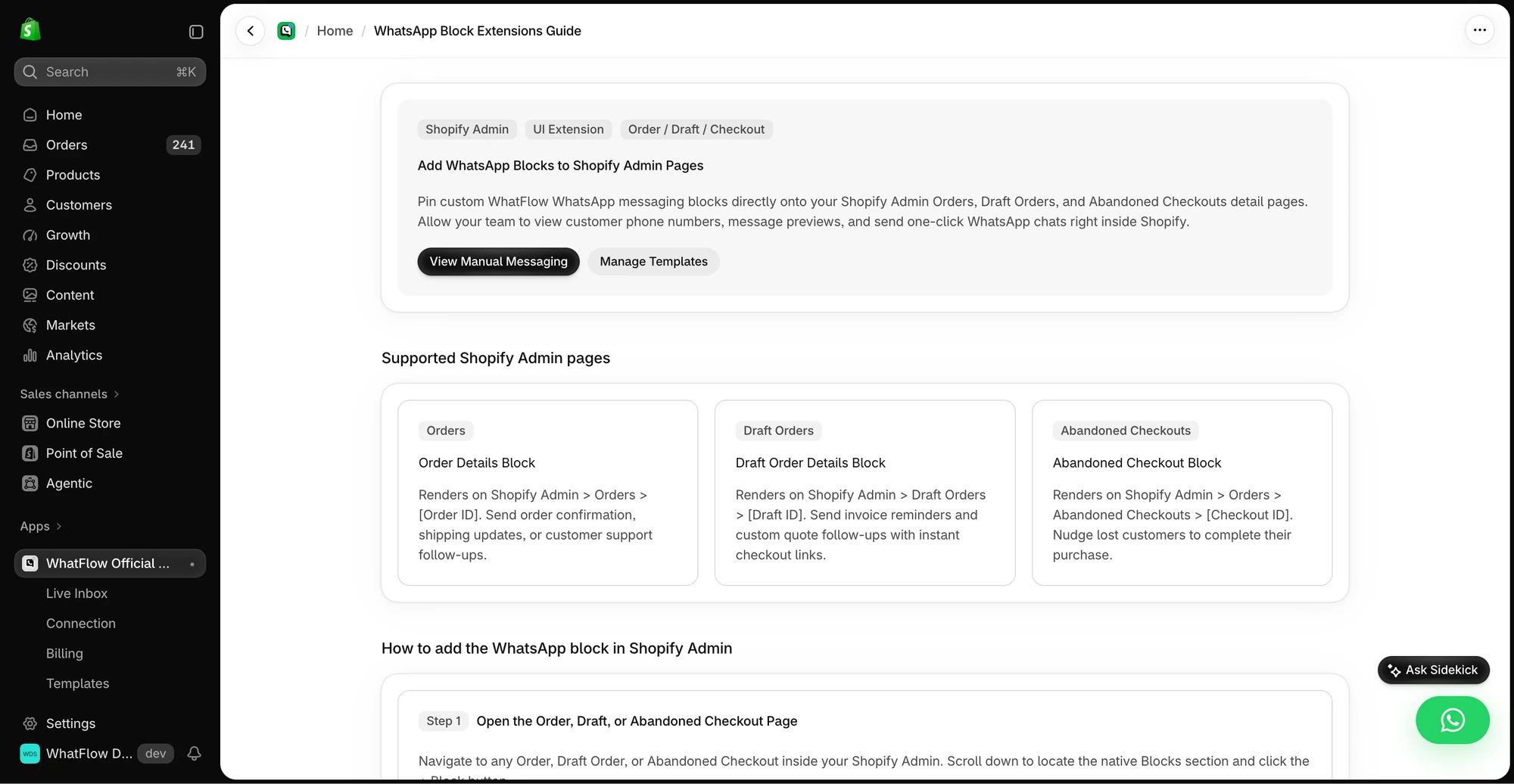
Rasayel is designed around deals moving through a CRM. That's great for B2B sales. A Shopify store's WhatsApp is mostly about orders: confirming COD, answering "where's my parcel?", handling a size swap. WhatFlow is built for that:
Hi Karim, your order #2208 (AED 420, cash on delivery) is ready. Tap Confirm and we'll deliver tomorrow, or Reschedule if another day suits you better.
Karim's tap fires WhatFlow's order-reply trigger in Shopify Flow, which can tag the order or route it to a teammate. Here's how to set up WhatsApp order replies in Flow.
The team inbox, minus the per-seat bill
WhatFlow's team inbox has assignment, filters and saved replies. Because there are no seat fees, the warehouse lead can jump in to answer a stock question without anyone asking whether it's worth a $30 licence. That's how a shared inbox should work for a small business; read setting up a shared inbox without losing ownership.
When testing WhatFlow and Rasayel, ask: How do you prioritize chats before their service window closes? In WhatFlow, use Needs reply and Closing soon, claim a conversation, then check Shopify order context and leave a private note. The team inbox walkthrough gives you a repeatable test for two agents, with no per-seat fee.
What should you set up first in WhatFlow?
Don't switch everything on at once. A sensible order for a small Shopify team:
- The chat button. Free forever, theme-matched, and it starts bringing conversations in on day one.
- Saved replies. Write answers to your five most common questions (delivery time, returns, sizing, COD, order status).
- One order template. COD confirmation if you sell cash on delivery, otherwise a shipping update.
- One Shopify Flow workflow that reacts to a WhatsApp reply. The template-from-Flow guide shows the steps.
- Abandoned checkout, once you're comfortable with templates and opt-in.
Every step above is available on the Free plan.
When Rasayel might still make sense
Pick Rasayel only if you run a real sales team that lives in Pipedrive, HubSpot or Salesforce, with at least five people who'll use it every day. It's built for that.
The bottom line
For a Shopify store, paying per seat with a five-user minimum to answer order questions doesn't add up. WhatFlow gives you the whole team, Shopify Flow, COD confirmation and every feature on every plan, starting free. Install it and invite everyone who talks to customers.
Questions worth asking
How much does Rasayel cost for a small team?
As of November 2026, Rasayel's Start plan is $30 per user per month with a five-user minimum, so at least $150/month, and Grow is $40 per user with a ten-user minimum. WhatFlow has no seat fees: plans start free, with paid plans from $4.99/month.
Is WhatFlow a Rasayel alternative for Shopify?
Yes, for stores whose WhatsApp work centres on orders. WhatFlow includes Shopify-mapped templates, COD confirmation, native Shopify Flow triggers and a no-seat-fee inbox on every plan. Rasayel fits sales teams that run deals through Pipedrive, HubSpot or Salesforce.
Does WhatFlow charge per inbox seat?
No. WhatFlow's team inbox has no seat fees, so your support, sales and fulfilment people can all answer WhatsApp without the bill changing. You pay for a message plan, and Meta bills its WhatsApp charges separately, as it would with Rasayel.
Is the WhatFlow Free plan limited?
No features are held back. The Free plan includes templates, Shopify Flow triggers and actions, COD confirmation, catalog sharing and the team inbox. Paid plans from $4.99/month only add message allowance at lower rates, and the theme-matched WhatsApp button is free forever.
Sources and methodology
We checked these primary sources on November 5, 2026. Vendor pages describe advertised capabilities, rather than independent performance tests. Confirm current pricing, plan limits and availability with each provider.
- Rasayel: official product and commercial information
Rasayel pricing page, checked November 2026: Start $30/user/month (5-user minimum), Grow $40/user/month (10-user minimum), CRM integrations by plan, Meta fees paid separately.
- WhatFlow WhatsApp Business API on the Shopify App Store
WhatFlow's plans (Free, and paid from $4.99/month), included sends, Shopify Flow and admin features, and its 5.0/5 rating from 55 ratings, checked November 5, 2026.
- WhatsApp Business Platform pricing
Meta's per-message WhatsApp pricing by country and template category, billed separately from any app or platform fee.