
Publisher disclosure: this comparison is written by WhatFlow. Competitor capabilities are based on the linked public documentation; the WhatFlow screenshots come from our demo store. Examples are illustrative, and results depend on your store and configuration.
WhatsApp with WhatFlow and RCS at a glance
| Consideration | WhatsApp with WhatFlow | RCS |
|---|---|---|
| Best-fit experience | Rich chat in the app your customers already use: images, buttons, catalog products and one thread per customer, under your business name. | Rich, branded messages in the phone's default messaging app, with a verified sender. Availability depends on device, carrier, market and provider. |
| Costs to include | WhatFlow plan (Free, then from $4.99/month) plus Meta's per-message charge by category and country. No seat fees. | Provider and carrier pricing for RCS, plus SMS fallback costs where RCS isn't available. |
| Shopify workflow | Shopify Flow triggers and actions, COD buttons that tag orders, cart recovery and a shared inbox, ready to install. | Depends on your provider's Shopify integration; check how replies reach your team. |
| Starting point | Free plan with every feature and a free-forever theme-matched WhatsApp button. | Ask a provider for coverage in your actual markets before building on it. |
| Where the customer finds you | In WhatsApp, next to their friends and family chats, with every past order message in one thread. | In the default messages app, alongside SMS from banks, couriers and one-time codes. |
For Shopify stores selling where customers use WhatsApp, WhatsApp is the safer primary channel and RCS a complement worth testing. Both can send rich, branded messages with a verified sender. The difference is the audience and the tooling: your customers already chat on WhatsApp, and WhatFlow already connects it to Shopify orders, Shopify Flow and a team inbox. RCS depends on device, carrier, market and provider.
WhatsApp vs RCS at a glance
WhatsApp (via WhatFlow) | RCS | |
|---|---|---|
Where it lives | The WhatsApp app | The phone's default messages app |
Rich features | Images, video, buttons, catalog products | Rich media, branding, read receipts |
Sender identity | Business name and logo, verified badge if you qualify | Verified sender icon |
Availability | Anyone with WhatsApp and data | Depends on device, carrier, market and provider |
Shopify tooling | Flow triggers and actions, COD tagging, shared inbox | Depends on your provider |
Fallback | Use SMS or email for non-WhatsApp customers | Often falls back to SMS |
Why should WhatsApp lead?
RCS is a genuine upgrade to SMS. Google describes RCS for Business as a way for customers to interact with brands on Android and iOS, with branding, rich media and a verified sender. Good.
But for a store in Karachi, Dubai, São Paulo or Jakarta, the question isn't "which protocol is richer?" It's "where do my customers already talk?" Usually the answer is WhatsApp, and that matters more than any feature list. Your WhatsApp thread sits next to their family group, not between a bank OTP and a courier text.
The mechanics that make WhatsApp the better default:
- One thread per customer with every order update, question and photo.
- Buttons and catalog. Confirm a COD order in one tap, or share a product from your live catalog (how it works).
- Shopify-connected today. With WhatFlow, templates pull Shopify order data, and replies trigger Shopify Flow.
- Predictable reach among customers who use WhatsApp, without checking carrier-by-carrier support.
What does that look like in a Shopify store?
Say you sell abayas and a customer pays cash on delivery. WhatFlow sends:
Hi Mariam, thanks for order #2207 (1 x Black Crepe Abaya, size 56, AED 320, cash on delivery). Can you confirm so we dispatch today? [Confirm] [Change size] [Cancel]
Confirm tags the order through Shopify Flow. Change size drops her into the team inbox, where whoever's on shift can sort it. That flow works today, on the Free plan. Read the COD confirmation guide for the setup.
Where does RCS fit?
RCS makes sense as an upgrade path for your SMS list: customers who don't use WhatsApp but whose phones and carriers support RCS. Before you commit, ask a provider for coverage in your actual countries and carriers, what falls back to SMS, and how replies reach your team. Treat it as a complement, not a replacement. Our email, SMS and WhatsApp coordination guide applies to RCS too.
How do the costs compare?
Get RCS pricing from your provider, including SMS fallback.
On WhatsApp, Meta charges per delivered message by template category and country (Meta's pricing docs). WhatFlow's app fee is separate, and every plan has every feature. As of November 2026: Free ($0, 100 messages a month), Starter ($4.99, 2,000), Plus ($9.99, 5,000), Growth ($29, 20,000), Scale ($49.99, 40,000) and Ultimate ($99, 75,000). Say you send 5,000 order and shipping messages a month: that's Plus at $9.99 on the app side, with your whole team in the inbox and no seat fees. See current pricing and the WhatsApp API pricing explainer.
How to decide in a month
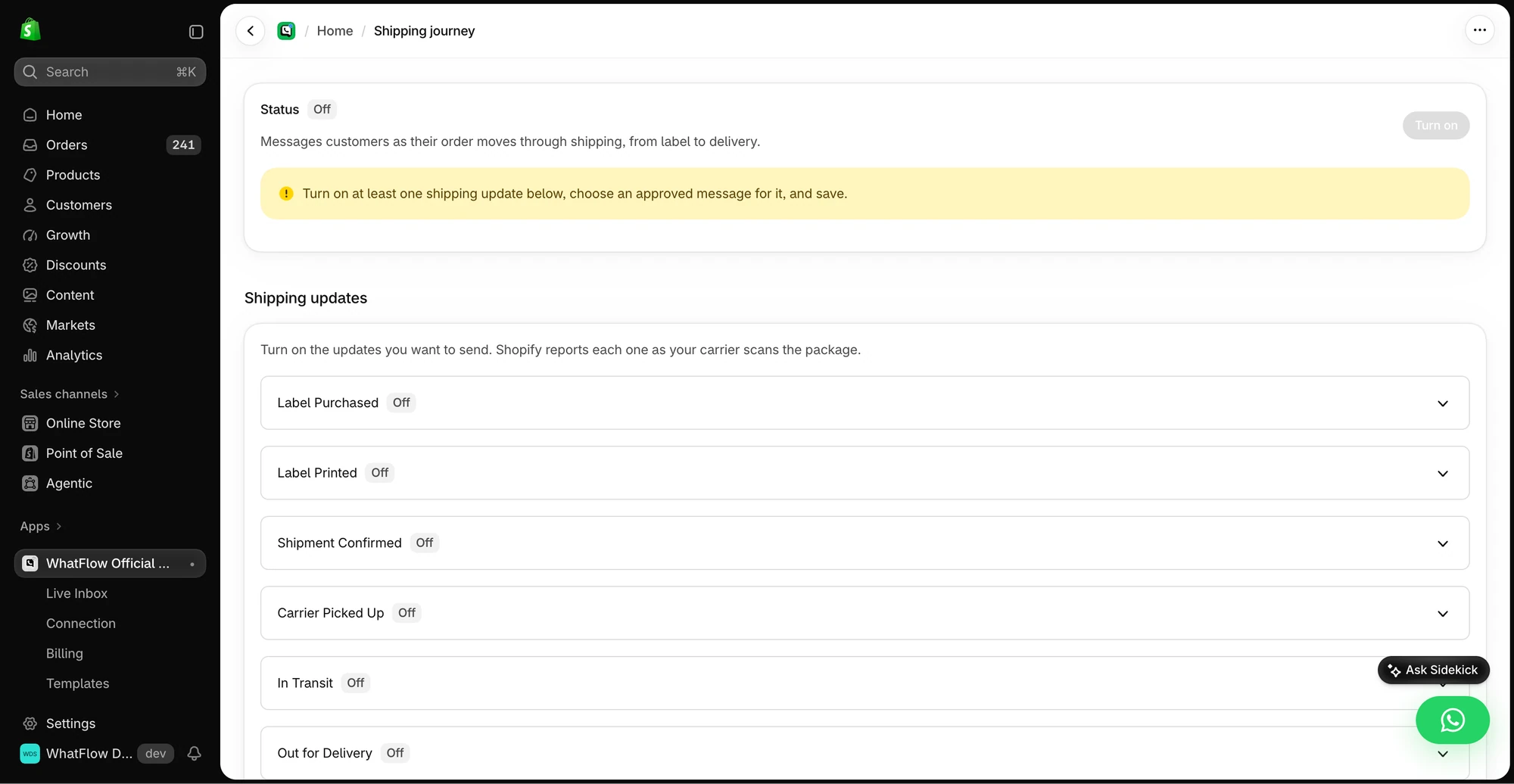
- Put WhatsApp on WhatFlow first for opted-in customers: COD confirmation, shipping updates, cart reminders.
- Ask an RCS provider for coverage of your non-WhatsApp customers' countries and carriers.
- Run the same shipping update on both for one month.
- Compare replies, button taps, delivered cost and team effort per resolved question.
Business-initiated WhatsApp messages need opt-in, and outside the 24-hour customer service window they must use an approved template (WhatsApp Business policy).
The bottom line
RCS is a better SMS. WhatsApp is where your customers already are. For Shopify stores selling where customers use WhatsApp, make WhatsApp on WhatFlow your primary channel (official Meta Cloud API, Free plan, every feature, no seat fees, rated 5.0/5 from 55 ratings on the Shopify App Store as of November 5, 2026) and test RCS for the customers who aren't there.
Questions worth asking
Is WhatsApp better than RCS for Shopify stores?
For stores selling where customers use WhatsApp, yes. Both offer rich, branded messages, but WhatsApp is already where those customers chat, and WhatFlow connects it to Shopify orders, Shopify Flow and a team inbox. RCS is worth testing in markets where your customers' devices and carriers support it.
How do I test RCS against WhatsApp?
Ask an RCS provider which of your customers' countries and carriers are covered and what falls back to SMS. Then send the same order update to opted-in customers on both and compare replies, taps, delivered cost and how your team handled the follow-up.
Does the free WhatFlow plan restrict features?
No. WhatFlow includes every feature on every plan, including Free. Plans differ only by message allowance and rates, and the team inbox has no seat fees.
Are WhatsApp charges included in WhatFlow's price?
No. WhatFlow's plan is the app fee. Meta charges separately per delivered message by category and country, so check Meta's pricing page for your markets.
Sources and methodology
We checked these primary sources on November 5, 2026. Vendor pages describe advertised capabilities, rather than independent performance tests. Confirm current pricing, plan limits and availability with each provider.
- WhatFlow WhatsApp Business API on the Shopify App Store
WhatFlow's listing, plans and Shopify integrations; rated 5.0/5 from 55 ratings as of November 5, 2026.
- WhatsApp Business Platform pricing
Meta's per-message WhatsApp charges by category and recipient country.
- Google: RCS for Business
Google's overview of RCS for Business on Android and iOS, including branding, rich media and a verified sender (checked November 2026).
- WhatsApp Business Platform pricing (developer docs)
How Meta bills per delivered message and how the customer service window works.