
Saved replies sound robotic when they replace the answer instead of speeding it up. Write each one for a single, specific question, put the answer in the first sentence, and leave a clearly marked gap for the fact that's unique to this customer, like her tracking status or order number. Then let whoever sends it change the wording. Consistent information, not identical sentences.
Every store hits the same moment: support gets busy, someone builds a folder of canned responses, and six months later customers are getting a three-paragraph apology in reply to "do you ship to Sharjah?"
Why saved replies sound robotic
It's rarely the words. It's these four habits:
- The answer is buried. "Thank you so much for reaching out to us! We truly appreciate your patience…" and the actual answer is in paragraph three.
- It answers a different question. "Where's my order?" gets the generic tracking reply when the customer already has tracking and it's been stuck for a week.
- It ignores what she said. She mentioned it's a gift for Friday. The reply doesn't.
- It's cheerful when she's upset. "Great question!" to someone whose parcel arrived broken.
Fix those four and most of the robot goes away.
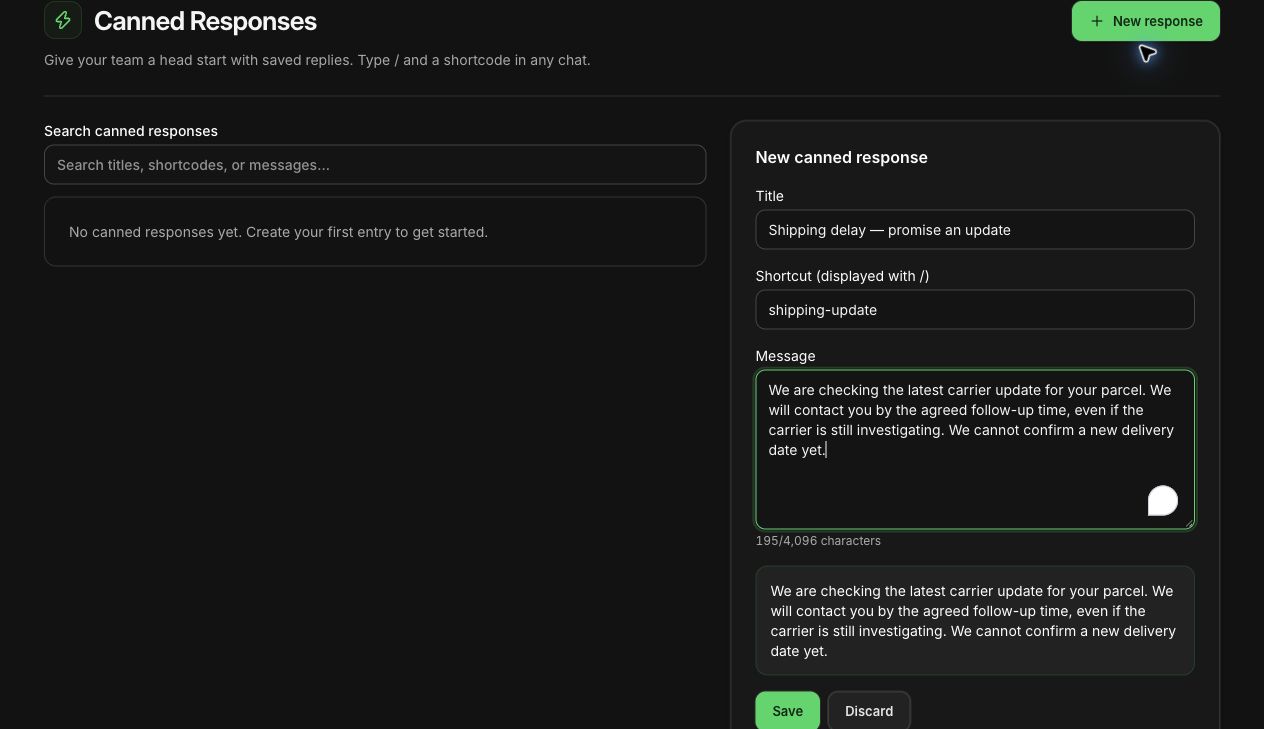
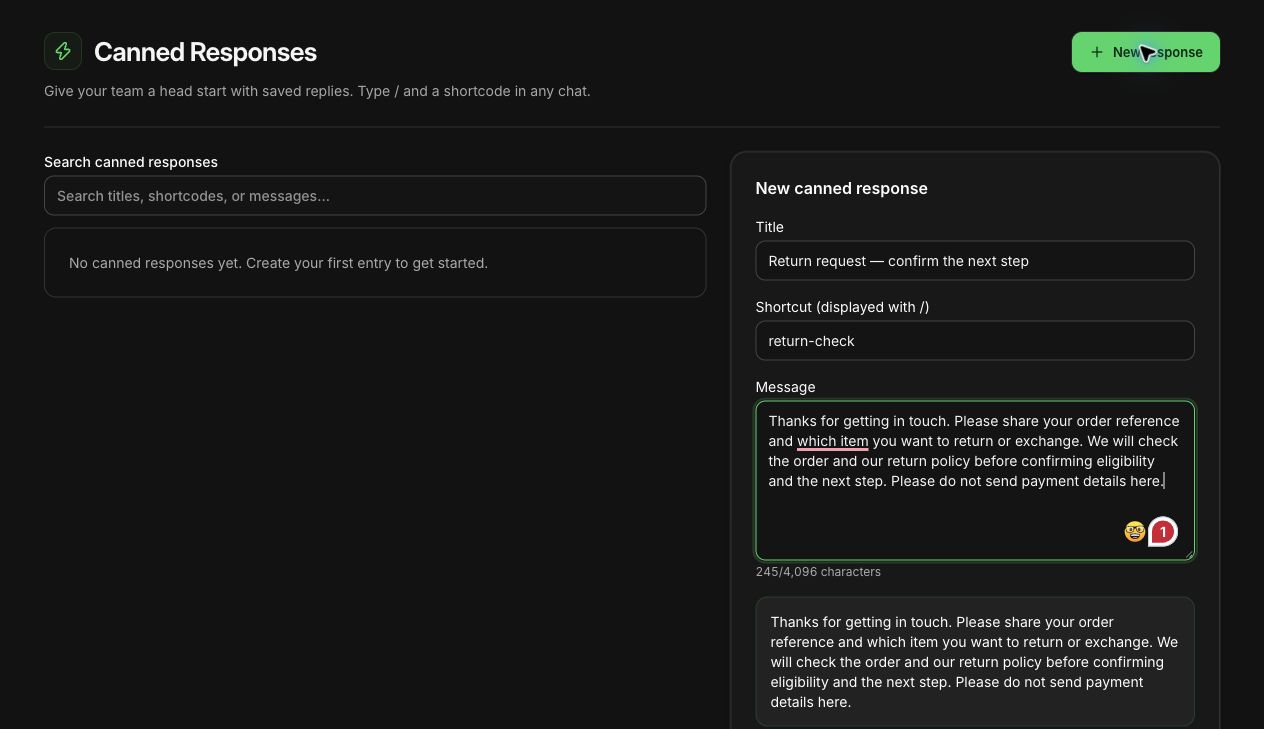
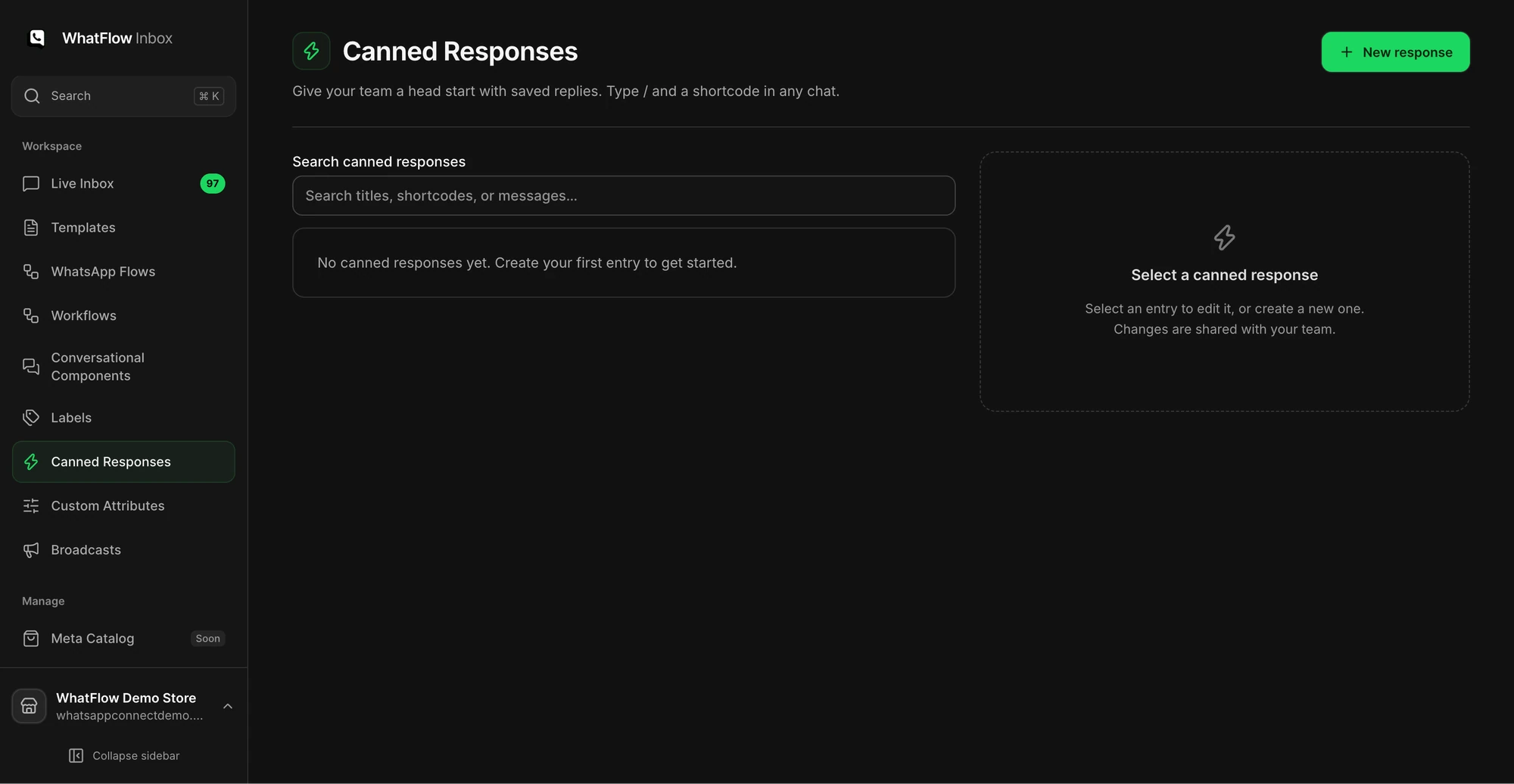
Save the repeatable part of a reply in WhatFlow, then check the facts before you send it. Agents can personalize a canned response, keep a draft in the thread, and put the internal context in a private note. Search inside the conversation if you need to verify what another agent promised. The Inbox walkthrough shows when to use each tool.
How to write a saved reply that sounds human
- One reply, one question. "I can't find my tracking" and "my tracking hasn't moved" are different replies.
- Answer first. The first sentence should be the thing she asked for.
- Mark the gaps. Use obvious placeholders like [tracking link] or [checked status] so nobody sends a reply with a sample value still in it.
- Keep the policy limit in. Don't write "free returns" if returns are free only within 14 days and unused. The longer accurate version saves a fight later.
- End with the next step. What happens now, and when.
- Write a "don't use when" note. For example: don't use the delay reply if the order is cancelled.