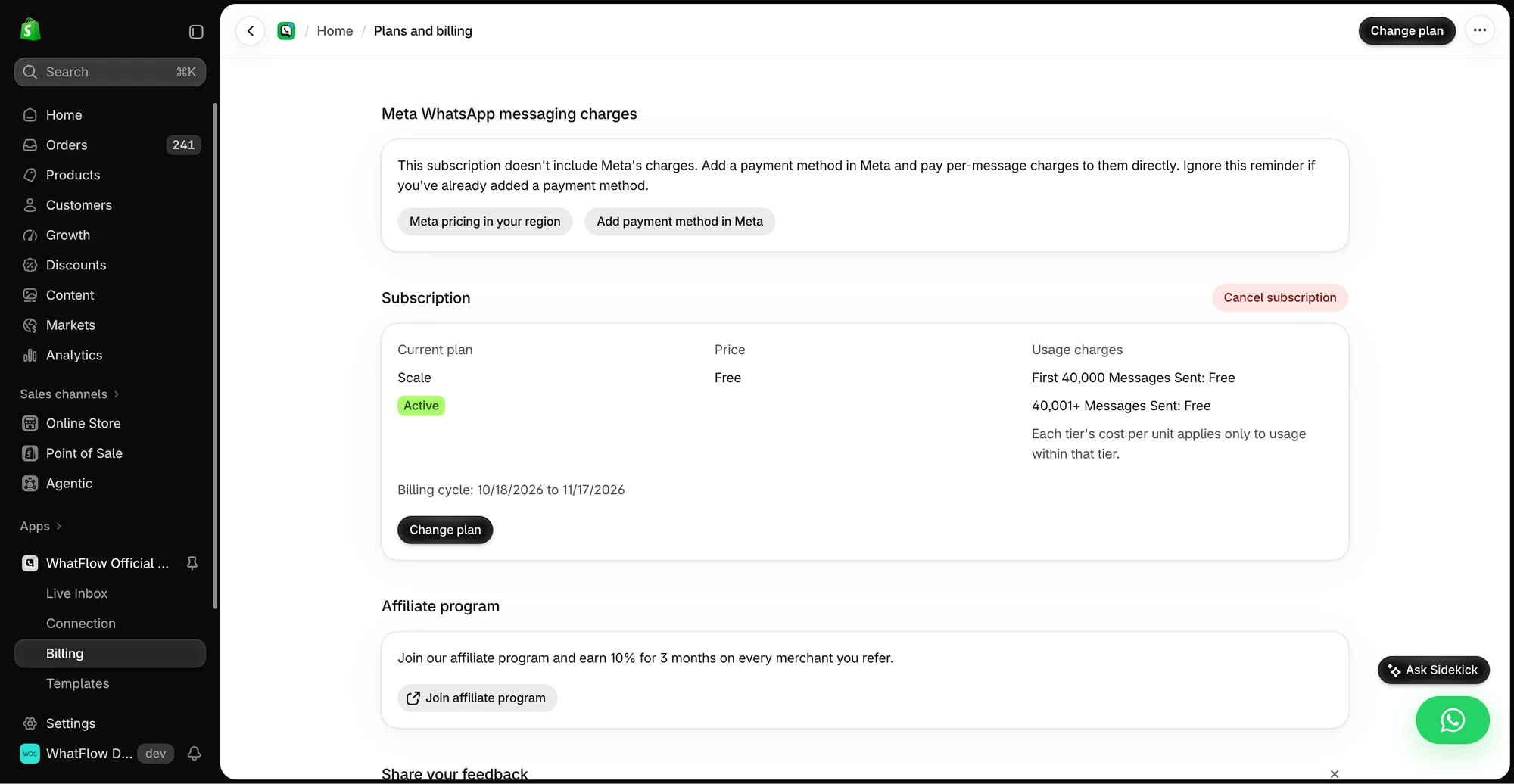

Meta's WhatsApp volume tiers give a lower rate on utility and authentication messages once your monthly volume in a market passes set thresholds, and only the messages above each threshold get the lower rate. To reconcile your Shopify message costs, compare like with like: delivered, charged messages by market and category for the same month on Meta's side, against what your app reports.
If you sent 50,000 WhatsApp shipping updates last month and the numbers don't line up, that's normal. The reports answer different questions. Here's how to read them.
How do Meta WhatsApp volume tiers work?
As of November 2026, Meta's pricing docs set these rules:
- Categories: utility and authentication only. Marketing has no volume tiers.
- Scope: tiers are counted per market and category, such as India-utility or Brazil-authentication, and added up across all the Messaging Accounts in your business portfolio. Not per phone number.
- What counts: only charged messages. Utility and authentication messages sent free inside a free entry point window don't count.
- Reset: monthly, at 12am in the Messaging Account's timezone.
- How the rate applies: incrementally. Meta's pricing page puts it plainly: tier rates "only apply to the messages in that tier".
Meta publishes the actual thresholds and tier rates in its rate cards (CSV and PDF, per currency) and in the rate tool on the WhatsApp Business pricing page. Use those for real numbers. Meta's own docs illustrate tiers with discounts of 5%, 10% and 15% below list, and say those figures are illustrative.
A worked example (hypothetical thresholds)
Say you run a Shopify store in India and send 250,000 delivered utility messages in a month: order confirmations and shipping updates. As of November 2026, Meta's India utility list rate is $0.0014. To keep the maths simple, imagine the first tier threshold is 100,000 messages with a 5% discount above it. These thresholds are made up for the example.
Slice | Messages |
|---|