
When a WhatsApp broadcast has failures, open the recipient report before you retry anything. A missing template value, an opted-out recipient, and a temporary sending error call for different responses. Sending the campaign again to everyone can duplicate messages for customers who already got them.
Say your Shopify store schedules a launch to 300 opted-in customers. The first deliveries look right, but several failures show up in the recipient table. Treat those rows as an investigation, not an instruction to push the retry button.
Pause if the problem could affect the rest of the audience
Open the campaign in WhatFlow Team Inbox. If it is still sending and you find a broken product link, incorrect personalization, or an audience mistake, pause the campaign where the control is available. Messages already sent cannot be taken back through that pause. Check one affected example and confirm whether the fault applies to the whole campaign or a few rows.
If the report just shows some messages pending, give the queue time to progress. Pending and failed are different. Compare the timestamps and statuses before you decide that the sender is stuck.
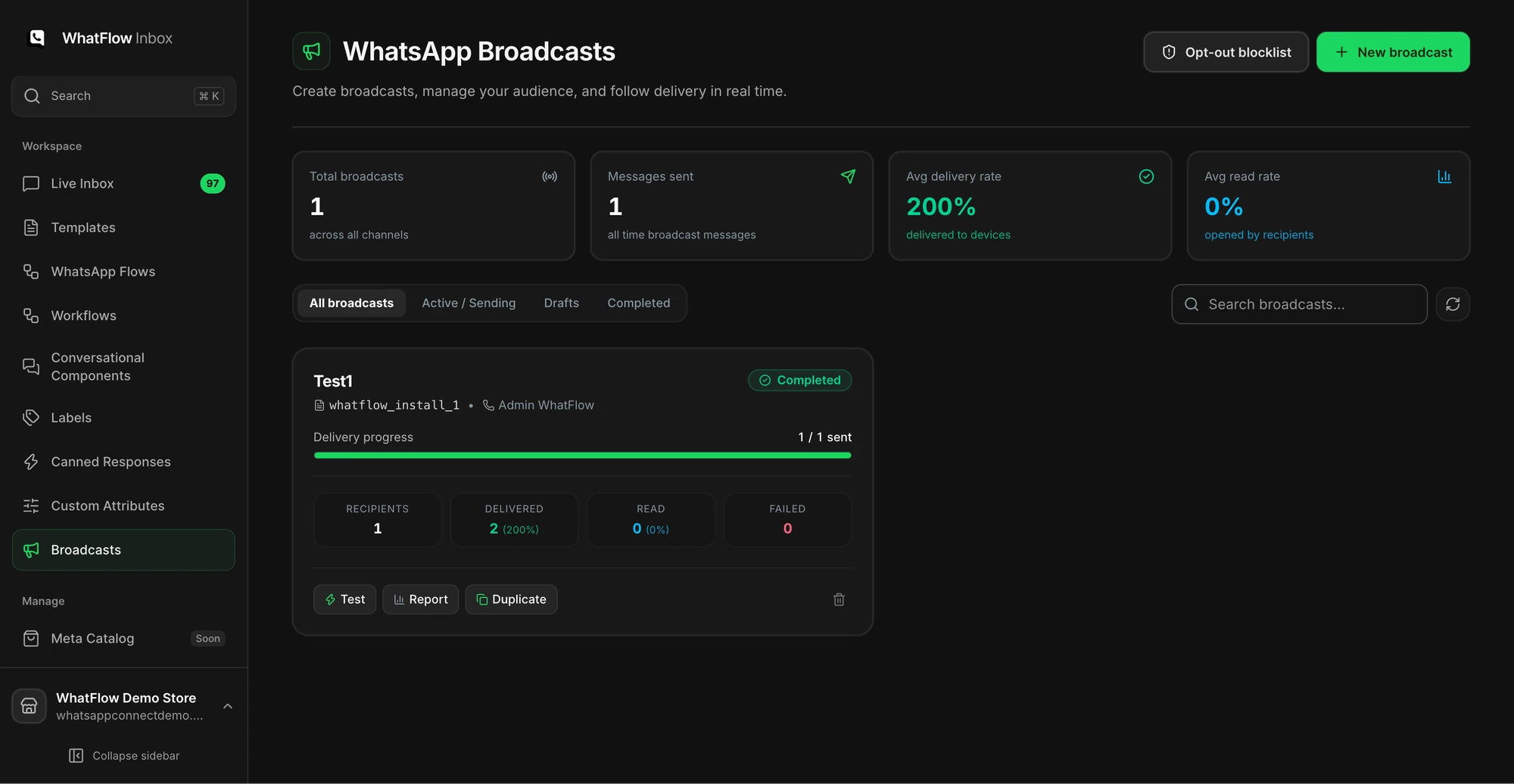
Read the failure and check the input
Use the recipient-level failure detail and export if you need to reconcile the audience against the source file. Check the phone format, mapped variables, template approval and sending account. If the recipient was blocked or opted out, keep them excluded. Don’t substitute another number from your CRM without verifying that it belongs to the right customer and can receive the message.
A simple triage sheet can have three columns: reason, fix, and retry decision. “Wrong template link” means the campaign needs a corrected message. “Missing product name” means checking the mapping and the original row. A permission or opt-out issue is a stop sign.
Retry selectively, then verify the outcome
After you correct a retryable failure, use the individual retry option and check the new status. WhatFlow also has a failed-recipient retry action where available. Reserve it for a group with the same known, corrected cause. If the approved template or audience itself needs to change, rebuild the affected portion rather than retrying bad input.